Demographic Data on Job Tenure by Generation: A Comprehensive Analysis
Job tenure, or the length of time an individual remains in a particular job, is a crucial aspect of the modern workforce. With the rise of the gig economy and the increasing prevalence of job hopping, understanding the trends and patterns of job tenure by generation is essential for employers, policymakers, and individuals alike. In this article, we will delve into the demographic data on job tenure by generation, exploring the key findings and insights that can inform our understanding of this critical aspect of the workforce.
Introduction to Job Tenure
Job tenure refers to the length of time an individual remains in a particular job. It is a critical aspect of the modern workforce, as it can have a significant impact on an individual’s career advancement, job satisfaction, and overall well-being. Job tenure can be influenced by a range of factors, including the type of job, industry, and individual characteristics such as age, gender, and education level.
Job Tenure by Generation
One of the most significant trends in job tenure is the variation by generation. The data suggests that different generations have distinct job tenure patterns, with younger workers tend to have shorter job tenures and older workers tend to have longer job tenures. This is likely due to a range of factors, including differences in career goals, job expectations, and the impact of technological changes on the workforce.
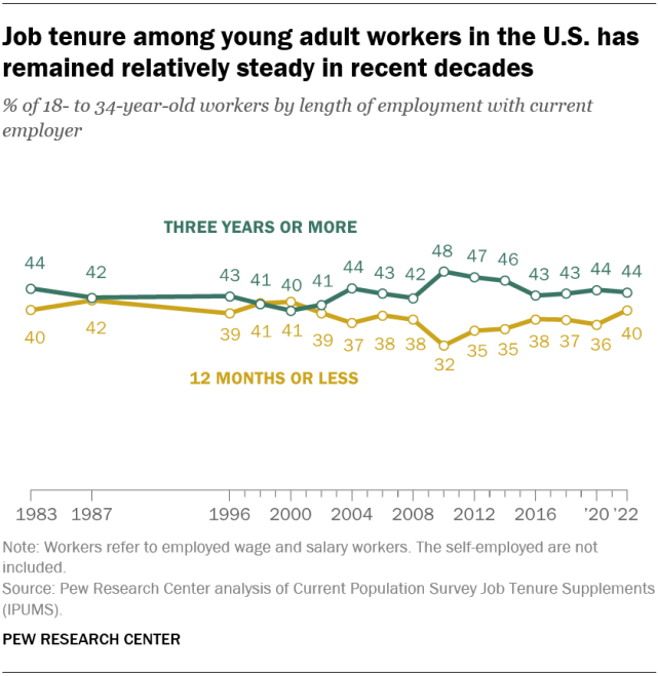
For example, a recent study found that young workers (those born between 1981 and 1996) tend to have shorter job tenures, with an average tenure of around 2-3 years. In contrast, older workers (those born between 1946 and 1964) tend to have longer job tenures, with an average tenure of around 5-7 years. This trend is likely due to a range of factors, including differences in career goals, job expectations, and the impact of technological changes on the workforce.
Factors Influencing Job Tenure
Several factors can influence an individual’s job tenure, including the type of job, industry, and individual characteristics such as age, gender, and education level. For example, a study found that individuals in the healthcare industry tend to have longer job tenures, with an average tenure of around 7-10 years. In contrast, individuals in the technology industry tend to have shorter job tenures, with an average tenure of around 2-3 years. This is likely due to the fast-paced and constantly evolving nature of the technology industry, which can make it difficult for individuals to remain in the same job for an extended period of time.
Conclusion
In conclusion, job tenure is a critical aspect of the modern workforce, and understanding the trends and patterns of job tenure by generation is essential for employers, policymakers, and individuals alike. The data suggests that different generations have distinct job tenure patterns, with younger workers tend to have shorter job tenures and older workers tend to have longer job tenures. By understanding the factors that influence job tenure, we can better inform our understanding of this critical aspect of the workforce and make more informed decisions about our careers and job choices.